Quarterly Magazine of the Central Asian Research Society
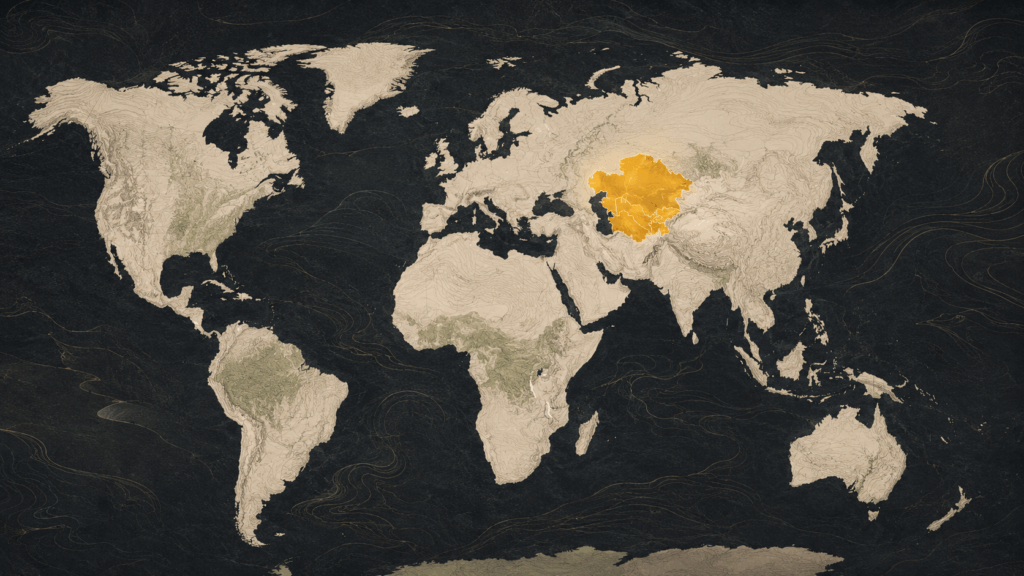
Central Asian Horizons is an open interdisciplinary online magazine published by the Central Asian Research Society. It welcomes contributions from all academic disciplines concerned with Central Asia—from archaeology, history, anthropology, ethnology and linguistics to geology, geography, ecology and other natural sciences, as well as the social sciences and research into the region’s contemporary societies.
What Central Asian Horizons Offers
The content of each issue will vary according to its main theme and the contributions received. Alongside academic and popular-science articles, the magazine will feature sections such as:
Journeys and Encounters
Travel writing, remarkable places, personal experiences and encounters with people who shape Central Asia today.
Flavours of Central Asia
Traditional dishes, local ingredients, recipes, dining customs and the stories connected with the cuisines of individual countries and regions.
People, Places and Traditions
Interviews, portraits of interesting people, local customs, crafts, festivals and the changing patterns of everyday life.
Central Asia in Pictures
Photographic essays and visual reports capturing the region’s landscapes, natural environment, cultural heritage and contemporary life.
Every issue will also include:
- News from Central Asia – recent developments in research, museums, cultural heritage and related fields;
- New Publications – an overview of recent books, academic articles, edited volumes and popular-science publications;
- Reviews – introductions to and critical discussions of recent academic and general-interest books.
Publication, Languages and Access
Central Asian Horizons is published quarterly in digital format, with every issue available in both Czech and English. Contributions may be submitted in Czech, English or Russian; accepted submissions will be prepared for publication in Czech and English.
Regular issues are available exclusively to members of the Central Asian Research Society and contributing authors. Special issues are freely available to the general public.
Current Issue
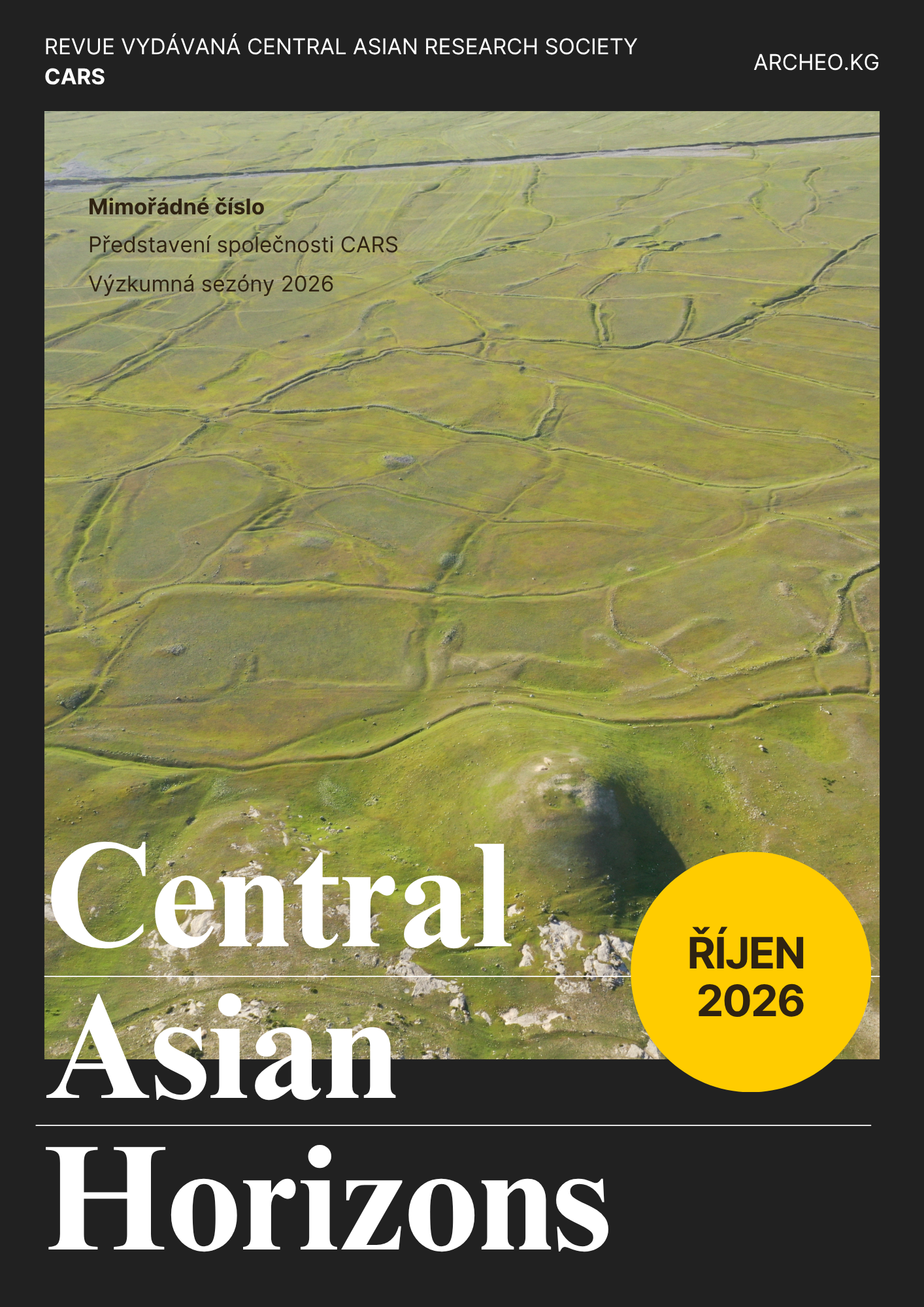
Special Inaugural Issue – October 2026
▼ OPEN SECTION
Special Inaugural Issue – October 2026
The first issue of Central Asian Horizons will be published in October 2026 and will have a special introductory character. It will present the Central Asian Research Society, its origins, members, aims and principal areas of activity.
The issue will also look back at the 2026 field seasons. Readers will be introduced to projects involving CARS members and partners, the progress of fieldwork and the first research results.
The inaugural issue will therefore present not only the Society itself, but above all the people, subjects and places that Central Asian Horizons will gradually introduce to its readers.
Editorial Board
The editorial board is responsible for the magazine’s direction, the selection of contributions, and their academic and professional standards.
Chair of the Editorial Board
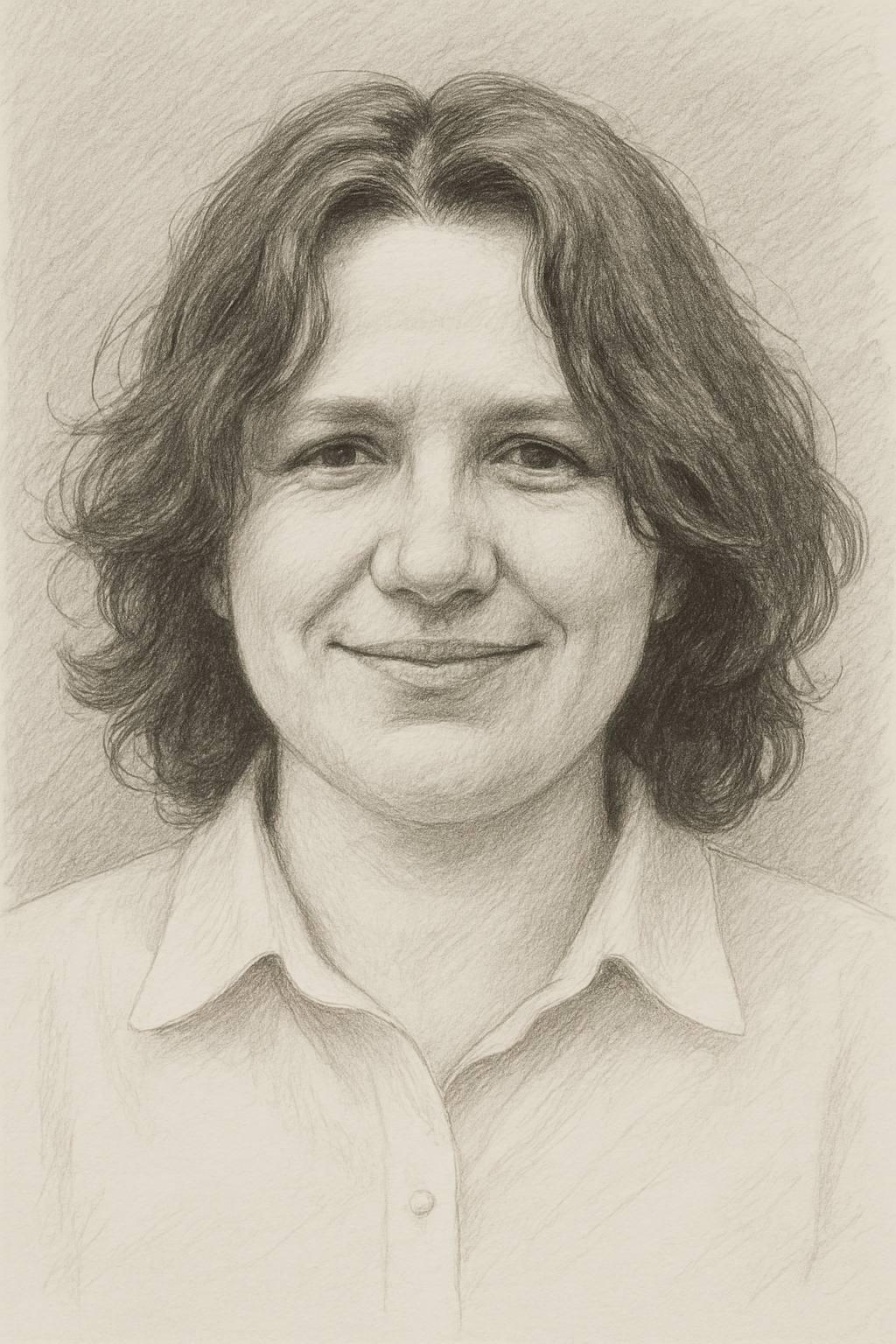
Assoc. Prof. Lenka Lisá, Ph.D.
Institute of Geology of the Czech Academy of Sciences
Editorial Board and Editorial Team
Editorial board members, editors and their institutional affiliations.
▼ OPEN SECTION
Mgr. Atilla Vatansever
Executive Editor
Department of Archaeology, Faculty of Arts, University of West Bohemia in Pilsen
Mgr. Magdalena Toušová, DiS.
Technical Editor
Pavel Lisý
Image Editor
Institute of Geology of the Czech Academy of Sciences
Assoc. Prof. Aleš Bajer, Ph.D.
Department of Geology and Pedology, Faculty of Forestry and Wood Technology, Mendel University in Brno
Mgr. Libor Petr, Ph.D.
Department of Botany and Zoology, Faculty of Science, Masaryk University, Brno
Mgr. Jozef Chajbullin Koštial
Department of Archaeology, Faculty of Arts, University of West Bohemia in Pilsen
Publish in Central Asian Horizons
Central Asian Horizons welcomes contributions from researchers, university students, museums, heritage institutions, non-governmental organisations, travellers, photographers and anyone with a serious interest in Central Asia. Both experienced researchers and first-time authors are invited to contribute, as are people who wish to share their personal experience of the region.
Contributions may be submitted in Czech, English or Russian. If you only have an idea at this stage, you are welcome to contact the editorial team before completing the article to discuss its focus, length and format.
Academic and Popular-Science Contributions
Research, discoveries, methods, projects and heritage protection written for a wider audience.
▼ OPEN SECTION
We welcome original and overview articles, presentations of ongoing research and projects, reports on new discoveries, methodological contributions, and articles dealing with the protection of Central Asia’s natural and cultural heritage.
Submissions are invited from all academic disciplines whose research contributes to a better understanding of Central Asia, including archaeology, history, anthropology, ethnology, linguistics, geology, geography, biology, ecology, climatology, social sciences and other relevant fields.
Articles should explain what the research or topic is about, why it matters, how the research is conducted, what has been discovered, and what the results mean for our understanding of Central Asia.
Features and Personal Stories
Travel writing, personal experience, local places, traditions, crafts and everyday life.
▼ OPEN SECTION
The magazine section welcomes travel writing, experiences from individual countries and regions, stories about interesting places, and articles about local gastronomy, traditions, crafts and everyday life.
We also welcome interviews, photographic essays, personal recollections and other contributions that can introduce readers to Central Asia from a less familiar perspective.
Personal experience is welcome, but factual information taken from books, articles, online sources or other external materials must be acknowledged.
Image Gallery
Individual photographs and thematic visual series presenting Central Asia from striking, unexpected or lesser-known perspectives.
▼ OPEN SECTION
The Image Gallery welcomes individual photographs and thematic visual series presenting Central Asia from striking, unexpected or lesser-known perspectives.
Contributions may capture landscapes and nature, archaeological sites and cultural heritage, towns and villages, research activities, gastronomy, traditions and everyday life.
Each photograph should be accompanied by a short caption, the location, the date or year if known, and the photographer’s name.
Contributors must hold the necessary rights for publication or provide evidence of appropriate permission or licence.
Reviews and New Publications
Reviews of recent books and short notices about new publications related to Central Asia.
▼ OPEN SECTION
A dedicated section will present reviews of recent academic and general-interest books. Reviews may be submitted by researchers, students and readers who wish to introduce or critically discuss an interesting publication.
If you have published a book, academic article, edited volume, catalogue, research report or another work related to Central Asia, you may also send us information for inclusion in the New Publications section.
Submission Contact and Deadline
Where to send proposals and when to submit contributions for the January 2027 issue.
▼ OPEN SECTION
Proposals, articles, photographs, reviews and information about new publications should be sent to:
Academic, popular-science and general-interest contributions, as well as book reviews intended for the January 2027 issue, may be submitted until 30 November 2026.
Author Guidelines
Central Asian Horizons is an interdisciplinary magazine for the public devoted to Central Asia. It is not an academic journal and does not publish conventional research papers with an extensive scholarly apparatus. All contributions, including those presenting scientific topics and research results, should be written in an accessible and engaging form for a wider audience.
General Principles
Language, style, editorial process and the basic character of the magazine.
▼ OPEN SECTION
Contributions may be submitted in Czech, English or Russian. The editorial team may make linguistic and stylistic changes in consultation with the author. Any substantial changes to the content will always be discussed with the author.
Specialist terms, procedures and methods should be explained briefly. Authors should avoid unnecessary jargon, extensive lists of data and details that are not essential to understanding the subject.
For the purposes of calculating length, one standard page is defined as 1,800 characters including spaces.
Types and Length of Contributions
Main article categories and recommended maximum lengths.
▼ OPEN SECTION
Popular-science articles on research and discovery:
Maximum length: 4 standard pages, corresponding to 7,200 characters including spaces. The article should include a title, author information, contact email, a short introductory paragraph, three to five keywords, the main text, a concise list of sources, and suitable visual materials with captions.
Magazine contributions:
Maximum length: 3 standard pages, corresponding to 5,400 characters including spaces. These may include travel writing, personal experience, interviews, stories about places, gastronomy, traditions, crafts or everyday life.
Image Gallery:
The image gallery is intended for individual exceptional images or thematic sets of photographs. A thematic series may be accompanied by an introductory text of up to 1 standard page, corresponding to 1,800 characters including spaces.
Reviews:
Maximum length: 2 standard pages, corresponding to 3,600 characters including spaces. A review should introduce and assess the publication, not merely summarise its content.
New Publications:
Information about books, academic articles, edited volumes, catalogues, research reports and other publications related to Central Asia may be submitted. The annotation should not exceed 1,000 characters including spaces.
Short News and Updates:
Maximum length: 1 standard page, corresponding to 1,800 characters including spaces. Short news items may report on research, discoveries, exhibitions, conferences, lectures, museum projects and other events related to Central Asia.
Images and Visual Materials
Required quality, captions, rights and permissions for photographs and other visuals.
▼ OPEN SECTION
Every contribution should be accompanied by appropriate photographs, maps, drawings, graphs or other visual materials. Images must be submitted as separate files and not only embedded in the text document. Authors may indicate their preferred position in the manuscript, for example: [Figure 1 approximately here].
Recommended formats are JPG, PNG or TIFF. Maps, graphs and diagrams may also be submitted as PDF or SVG files. Images should be of sufficient quality for digital publication, ideally at least 2,000 pixels wide.
Each visual item must include a figure number, caption, creator’s name, source information, and details of the licence or permission to publish if the material was not created by the author.
Authors may submit only visual material that they created themselves, that they are permitted to use, that has been published under a licence allowing further use, or that is demonstrably in the public domain. Acknowledging the source alone does not grant permission to reproduce and publish another person’s image.
Citations and Sources
Basic citation rules and reference format used by Central Asian Horizons.
▼ OPEN SECTION
Although Central Asian Horizons is a magazine for the public, all information, ideas, interpretations and data taken from other sources must be traceable.
Popular-science articles on research and discovery must include a concise selection of the most important sources at the end of the text. Magazine contributions must cite sources whenever they use historical, scientific or other external information alongside the author’s personal experience.
Central Asian Horizons uses the Chicago Author–Date citation system. References are placed directly in the text in parentheses. Footnotes should be used only for essential additional explanations and not for standard bibliographic references.
Examples: (Surname 2024, 35); (Surname and Surname 2024, 35–37); (Surname et al. 2024, 18).
Manuscript Preparation
File format, layout, tables, figures and recommended file names.
▼ OPEN SECTION
Contributions must be submitted in an editable DOCX format.
The manuscript should use simple formatting: standard paragraphs, clearly marked headings and subheadings, italics for the titles of books and journals, bold type only when necessary, automatic bullets and numbering, and no manual hyphenation or designed page layouts.
Tables must be created as editable tables and not inserted as images. Graphs, maps and diagrams should also be provided in their original editable or vector format whenever possible. All visual materials must be submitted separately.
Recommended file names: Surname_article_title.docx, Surname_figure01.jpg, Surname_figure02.jpg, Surname_map01.pdf.
Submitting a Contribution
Submission address, editorial assessment and deadline for the January 2027 issue.
▼ OPEN SECTION
Articles, photographs, reviews, information about new publications and proposals should be sent to:
Authors who only have an initial idea are welcome to contact the editorial team before completing their contribution to discuss its focus, length and appropriate section.
Contributions intended for the issue to be published in January 2027 must be submitted by 30 November 2026.
The Editorial Board will assess the thematic relevance, accessibility and overall quality of each submission. Authors will be informed by email about acceptance, requested revisions and publication in a particular issue. Submission does not automatically guarantee publication.