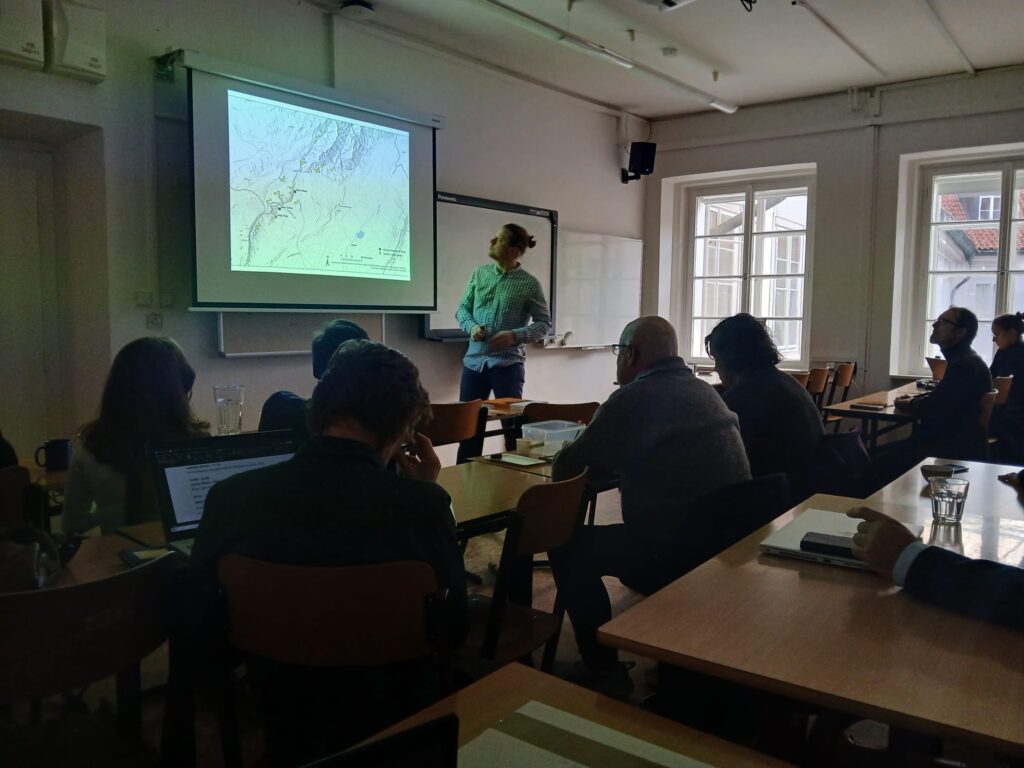
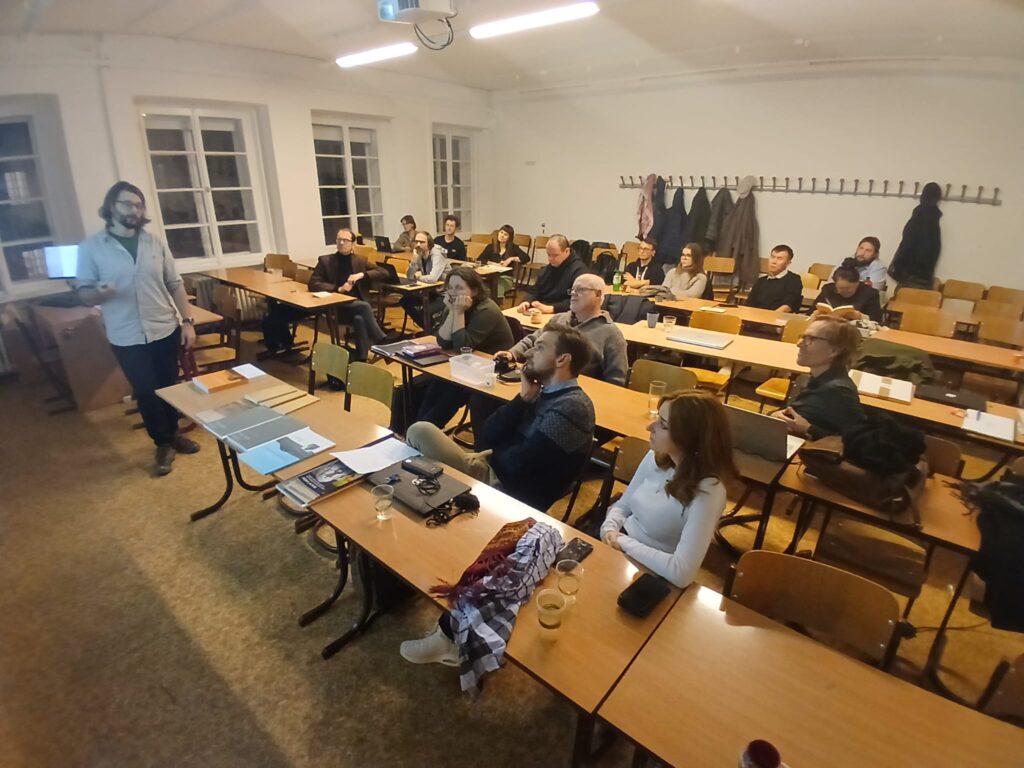
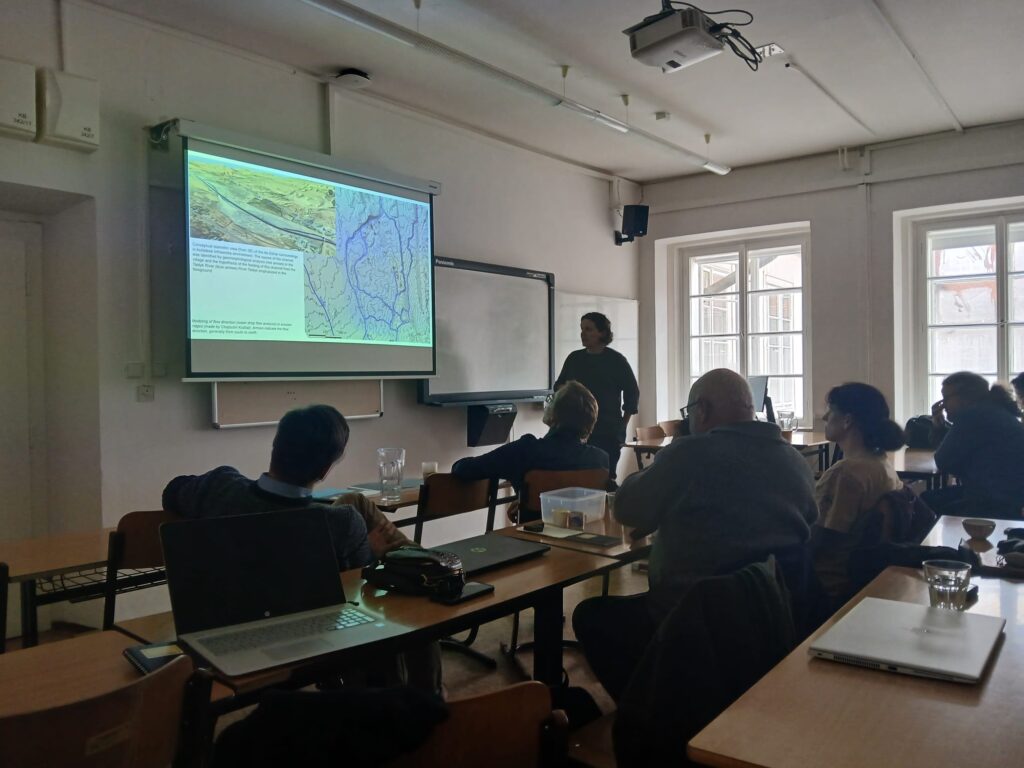
The third annual scholarly colloquium Winds of the Steppe, Walls of the Oasis: Contributions to the Archaeology and History of Central Asia (Vítr stepí, hradby oáz. Příspěvky k archeologii a historii Střední Asie) took place on 20 November 2025 at the Faculty of Arts, Charles University. The traditional meeting, organised by the Institute of Classical Archaeology, offered a diverse programme focused on archaeology, history, and environmental research in Central Asia. This year’s edition was marked by closer cooperation among research teams that have been conducting fieldwork in Kyrgyzstan and neighbouring regions over the years.
The colloquium programme included more than a dozen specialist presentations showcasing the latest results of archaeological and environmental projects from Kyrgyzstan, Uzbekistan, Kazakhstan, and northern Afghanistan. The central theme of this year’s meeting was the coordination and exchange of knowledge among institutions that have been conducting field research in Central Asia for several years.
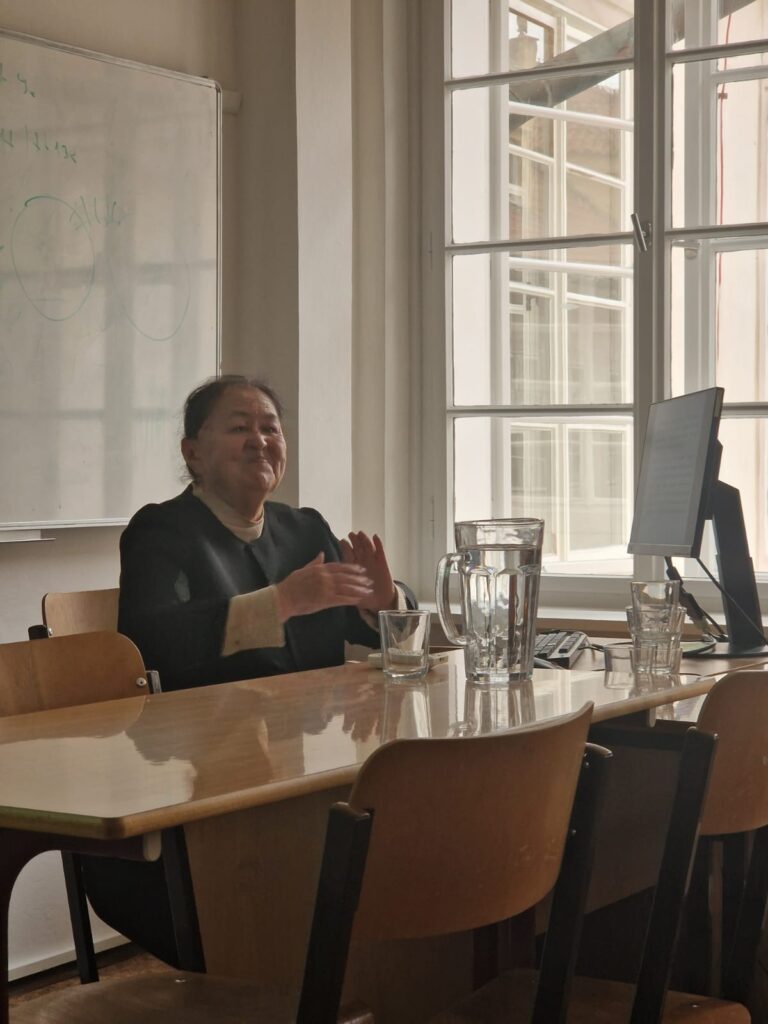
The opening session was dedicated to ethnological studies, with what was probably the first presentation dealing with the history of scouting in historical Turkestan – an unexpected but engaging contribution. This short session was followed by a guest lecture by Dr. Kadicha Iskandarovna Tashbaeva from the National Academy of Sciences of the Kyrgyz Republic, who presented the current results of archaeological excavations in southern Kyrgyzstan. Her paper brought new insights into the chronology and cultural context of finds from the Fergana Valley and the Aravansky Ayyl area.
The lecture was followed by a session dedicated to understanding early settlement structures and landscape development in Central Asia from both archaeological and environmental perspectives. The head of excavations, Pavel Vařeka from the University of West Bohemia (ZČU), introduced the long-term project at the site of Ak-Dzhar, based on a combination of archaeology, anthropology, geoarchaeology, archaeozoology, and anthracology. The project involves researchers affiliated with various Czech institutions, including the University of West Bohemia (ZČU), Masaryk University (MU), the Institute of Geology of the Czech Academy of Sciences (GLÚ AV ČR), and the Central Asian Research Society (CARS).
The third morning session was devoted to projects recently carried out in south-western Kyrgyzstan, in the Ravat area. A number of small-scale projects, ranging from prehistory to the archaeology of modernity, were introduced mainly by Kadicha Iskandarovna Tashbaeva, Pavel Vařeka (ZČU), and Atilla Vatansever (ZČU and CARS), who are among the leading researchers in these initiatives. The final presentation from Kyrgyzstan was delivered by Josef Chajbulin Koštial (ZČU and CARS), who demonstrated the possibilities of automatic detection of anthropogenic structures.
Atilla Vatansever (ZČU and CARS) presented a paper focusing on iron production and the organisation of industrial areas in the Late Iron Age and Early Medieval periods in Ravat, highlighting exceptionally well-preserved remains of furnaces, slag, and processing facilities that attest to a long-standing metallurgical tradition in the region.
“The colloquium is a unique opportunity to connect the various projects taking place in the region. The discussions help us to see links between different research areas and to place them in a broader international context,” he noted.
The afternoon sessions were dedicated mainly to ongoing projects of Charles University (UK) in Uzbekistan. They offered an exceptionally broad range of topics, covering the entire chronological and geographical spectrum of Central Asia. New findings from the sites of Kulal Tepa and Dalverzin Tepa, focusing on urban development and ceramic traditions during the Kushan Empire, were presented. These lectures provided valuable insights into the interaction between urban culture and rural hinterlands and emphasised the importance of the Fergana Valley as a key communication corridor linking Central Asia, India, and northern Iran.
One of the presentations, given by Lenka Lisá (GLÚ AV ČR and CARS), introduced the history of Kaptar Kamar Cave in southern Uzbekistan, shedding light on the timespan from the Upper Palaeolithic to the Neolithic and Bronze Age occupations of the cave, as well as on the environmental conditions faced by prehistoric communities.
“Combining geological and archaeological methods allows us to trace the development of settlement systems within a broader environmental framework,” she added.
The programme also included presentations devoted to archaeobotanical studies from the Fergana Valley, delivered by Libor Petr (MU and CARS), which provide complementary information on the economic and cultural development of the region. Physical anthropology was likewise well represented, particularly through research from the Talas area, where new analyses of early-medieval burial assemblages were presented. These studies contribute to a better understanding of demographic trends, health, and population movements between western and eastern Central Asia.
An important part of the programme was devoted to the protection and conservation of archaeological sites, which in recent years have been endangered by industrial expansion and modern construction. The discussions raised crucial questions concerning fieldwork ethics, site documentation, and the use of remote-sensing technologies for monitoring endangered locations.
The colloquium Winds of the Steppe, Walls of the Oasis thus confirmed that Czech research in Central Asia rests on solid foundations and that the combination of archaeology, geology, and environmental sciences continues to generate new impulses for collaborative projects.
Atilla Vatansever & Lenka Lisá